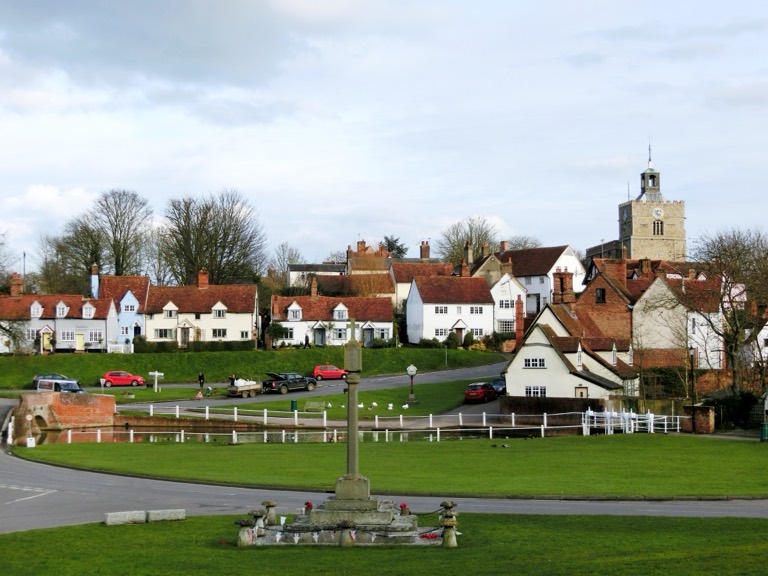
Village green & duck pond
The defining view of Finchingfield: pond, railings, bridge and colour-washed cottages with the church above. Best photos from the bridge and approach roads at golden hour.
The classic village scene is free and open at any time. All photos below are real images of Finchingfield, apart from the airfield museum’s archive photo of RAF Wethersfield.
Visiting soon? Parking, getting here and the best times to visit are on Map & parking.
The defining view of Finchingfield: pond, railings, bridge and colour-washed cottages with the church above. Best photos from the bridge and approach roads at golden hour.
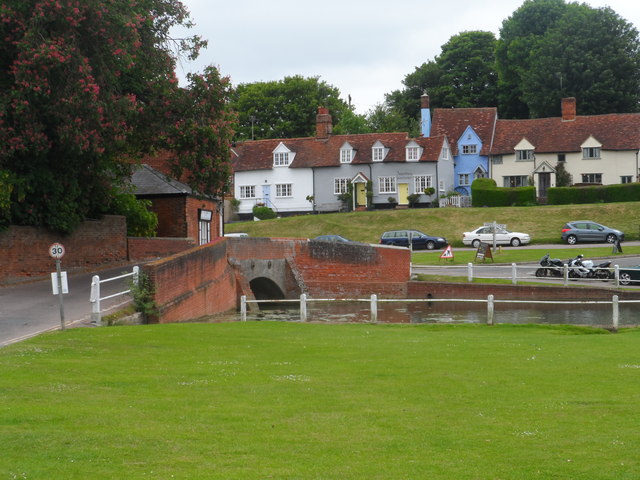
The brick bridge over the village pond is central to the postcard composition — a favourite stop for photographers and a natural place to pause and watch the ducks. The narrow, roughly 200-year-old bridge carries the B1053 over the pond, and vehicles have damaged its parapets several times. Essex Highways closed it for repairs in October 2023 and March 2024, and again for about five days from 16 March 2026 (buses and emergency vehicles were let through). A plan to rebuild the bridge, submitted for planning permission in December 2022, was later withdrawn. In its latest update (November 2024), Essex Highways said it was looking into strengthening the bridge instead, with most of the work likely to be done underneath, and was monitoring it in the meantime. If you’re driving through, check their Finchingfield Bridge page first.
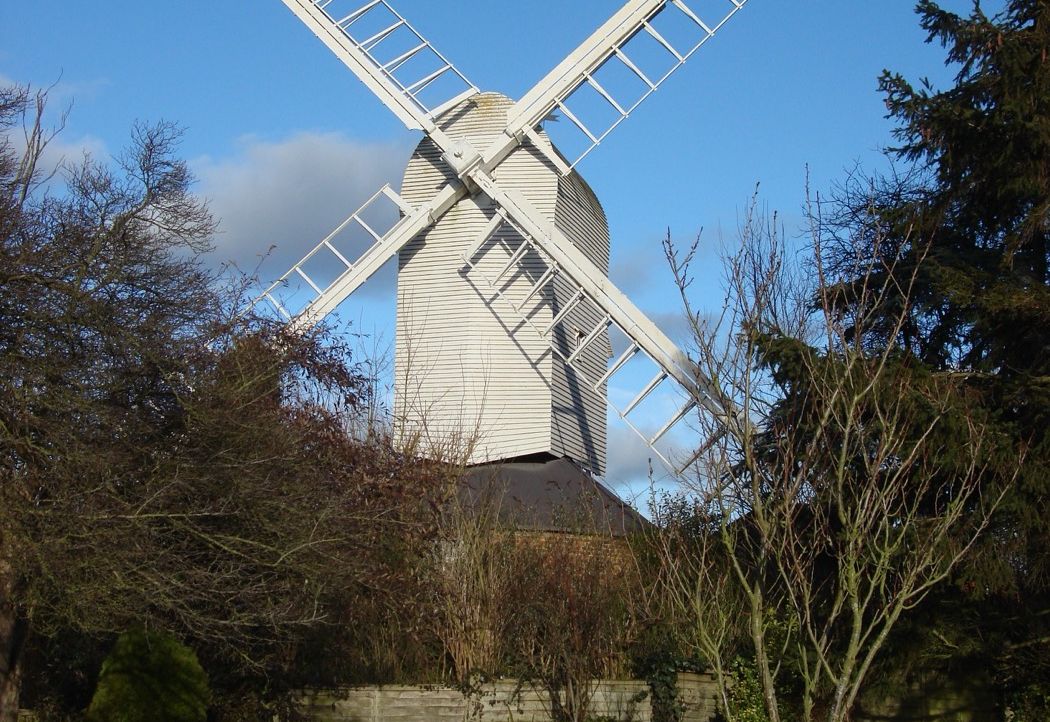
Duck End Mill / Letch’s Mill — a historic post mill on the hill above the village. Opens on the third Sunday of each month, April to September, 2–5pm — see what’s on.
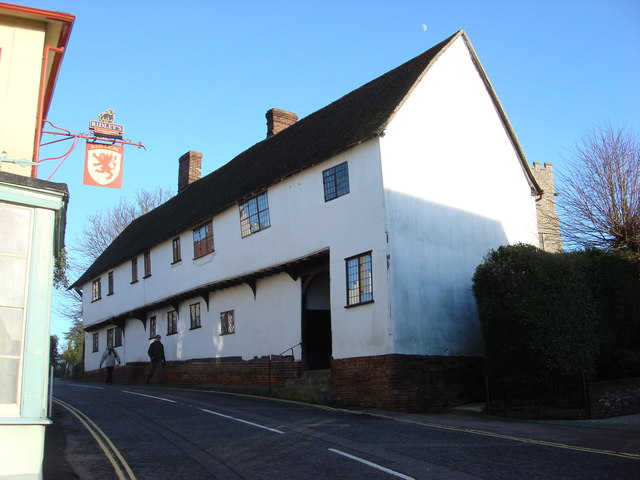
A 15th-century timber-framed building beside the church, with museum, village library and hireable Guild Room. The museum is open on Saturday and Sunday afternoons, 2–4pm, from March to October (free entry; donations welcome), and guided heritage tours can be booked for groups via newmail@finchingfieldguildhall.org.uk. Avoiding the hill? Use the churchyard path from Vicarage Road.

Now in the centre of Finchingfield overlooking the green, this volunteer-run free museum tells the story of RAF Wethersfield and Anglo-American air power — from the 416th Bomb Group’s D-Day Havocs to Cold War Super Sabres (pictured: an F-100 at RAF Wethersfield, 1966 — US Air Force). Open on Saturdays (10am–4pm, last admission 3pm) until the end of October 2026, plus Sunday 25 October. Check Facebook for dates.
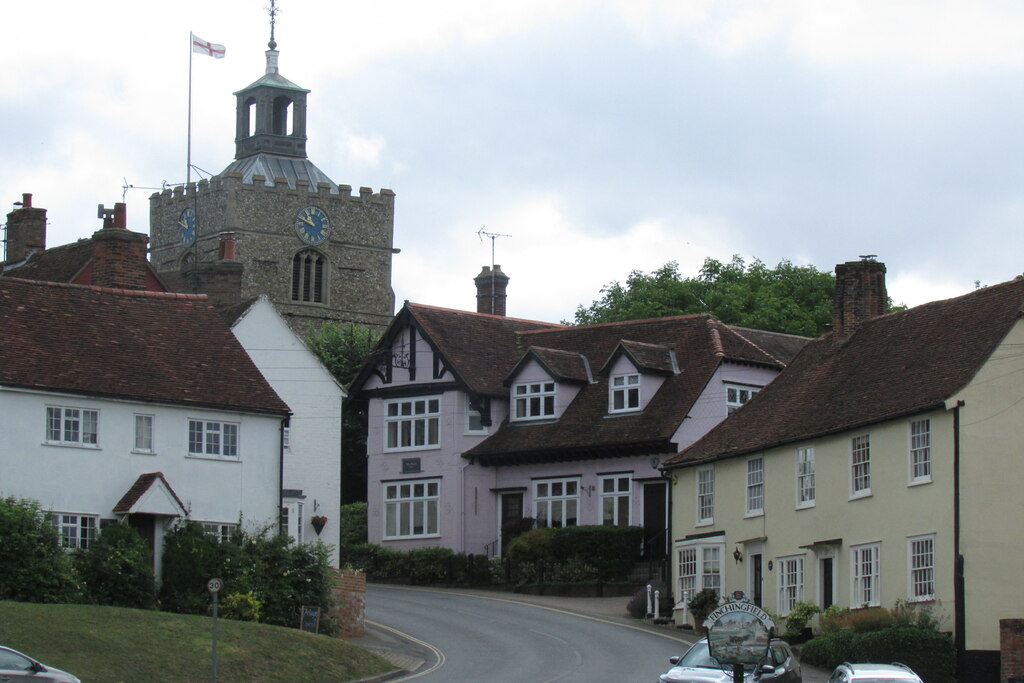
The church tower crowns the skyline above the green, with Norman origins and later medieval fabric. Climb Church Hill for one of the best overlooks of the village.
Inside, look for the early 15th-century oak chancel screen and, in the south chapel, the altar tomb of John Berners and his wife Elizabeth (d. 1523) with brass figures on a Purbeck marble slab. The north (Kempe) chapel holds Kempe family monuments, including the 1652 tablet to William Kempe. In the chancel, look up: the braces of the easternmost roof truss are inscribed “This roof was builded anno domini 1635 at the charge of Robert Kempe Esquiir”. The listing also records a nine men’s morris board scratched into the ledge of the second south-aisle window.
No regular opening hours are published for the church, so check before making a special trip. There is level access to the main areas, and the church is listed as dog friendly.
Church details & contact ↗ · Services & news: Pant Valley Churches ↗
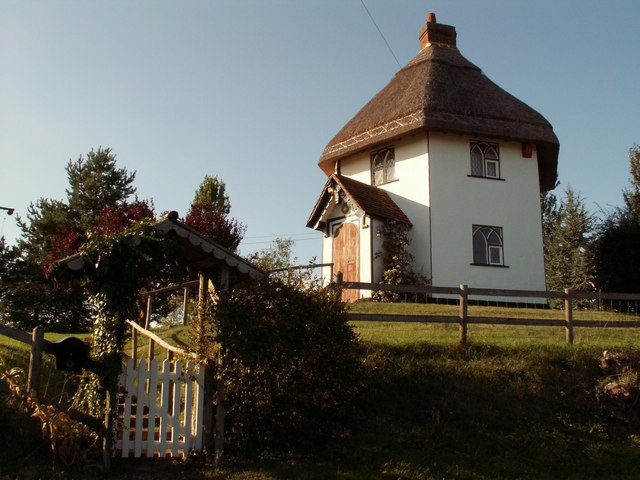
The distinctive “Pepper Pot” cottage (actually hexagonal), linked in local history with Dodie Smith, author of The Hundred and One Dalmatians. Part of Finchingfield’s rich streetscape of listed buildings.
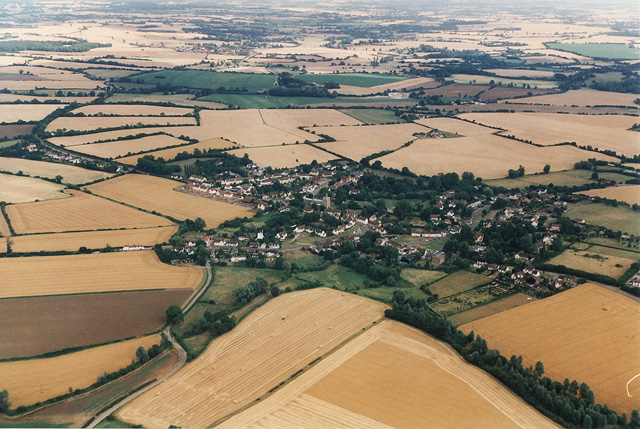
Footpaths fan out into the North Essex countryside, and the Hundred Parishes Society publishes free route guides. Walk 103 is a fairly flat 4.5-mile (7 km) circuit from the Stephen Marshall Avenue car park (CM7 4LZ). Walk 104 is a 6.3-mile (10 km) circuit from Great Bardfield that passes through Finchingfield and crosses the Spains Hall Estate, with views of the Hall.
Some paths get muddy in autumn and winter, so wear boots, and use OS Explorer map 195. Spains Hall is a private home and its estate a working farm, so keep to the public footpaths. A pictorial walking guide to the village’s historic buildings has been sold at the Guildhall and the Post Office, with proceeds going to the Guildhall museum; ask at either to check it’s in stock.
Both walks, maps & tips · Walk 103 guide (PDF) ↗ · Walk 104 guide (PDF) ↗
Just outside the village, Finchingfield Camping offers seasonal field visits and countryside stays. The fields open for a short summer window, with the lavender typically in bloom from early July to mid-August, so book ahead via their site for next season’s tickets. Visits are by pre-booked ticket only with limited daily numbers. No dogs, and no picnics of your own (there’s an on-site café).
Home of the mid-20th-century Bardfield Artists. Hundred Parishes Walk 104, a circuit from Great Bardfield, passes through Finchingfield.
A medieval Guildhall and a large church. John Webb’s Windmill is closed for a major restoration, and its trustees hope to reopen it in spring 2028. Until then, visitors can see the work from a public viewing area outside.
A Norman keep. General admission to the castle and gardens for 2026 ended on 11 October. In December the castle runs a new ticketed ‘Keep’ Festive Illuminations Trail, 7–20 December, with timed entry, last entry 9pm and tickets at £15 (under-4s free). Some dates have already sold out. A gala opening night on 6 December costs £20. It also holds a ‘Keep’ Christmastide Market on Friday 18 December (4pm–10pm) and on Saturday 19 and Sunday 20 December (10am–10pm). Entry to the market is free, but booking ahead is recommended, and Santa visits are ticketed separately. Dogs are not allowed at either event, apart from registered guide and medical assistance dogs. Check the castle’s events page for current dates. Hedingham Castle ↗
A museum, Bridge End Garden and the Fry Art Gallery.